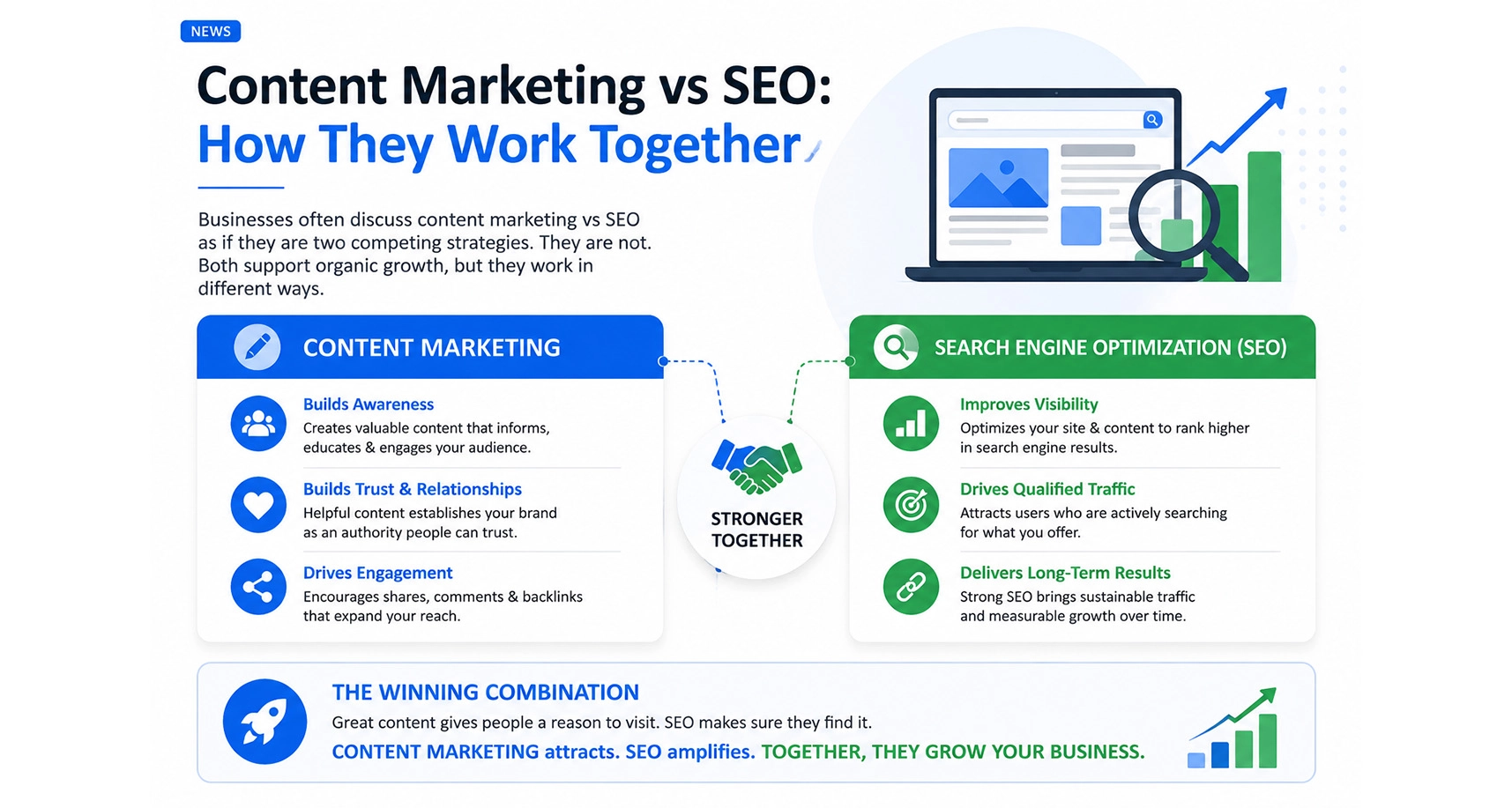

Businesses often discuss content marketing vs SEO as if they are two competing strategies. They are not. Both support organic growth, but they work in different ways.
SEO focuses on helping a website appear in relevant search results. Content marketing focuses on giving audiences useful information that answers questions, solves problems, or supports decisions. When these two work together, businesses can attract the right audience & give them a reason to stay.
Understanding this relationship is important for building a website that attracts traffic & turns that traffic into meaningful results.
What Is SEO?
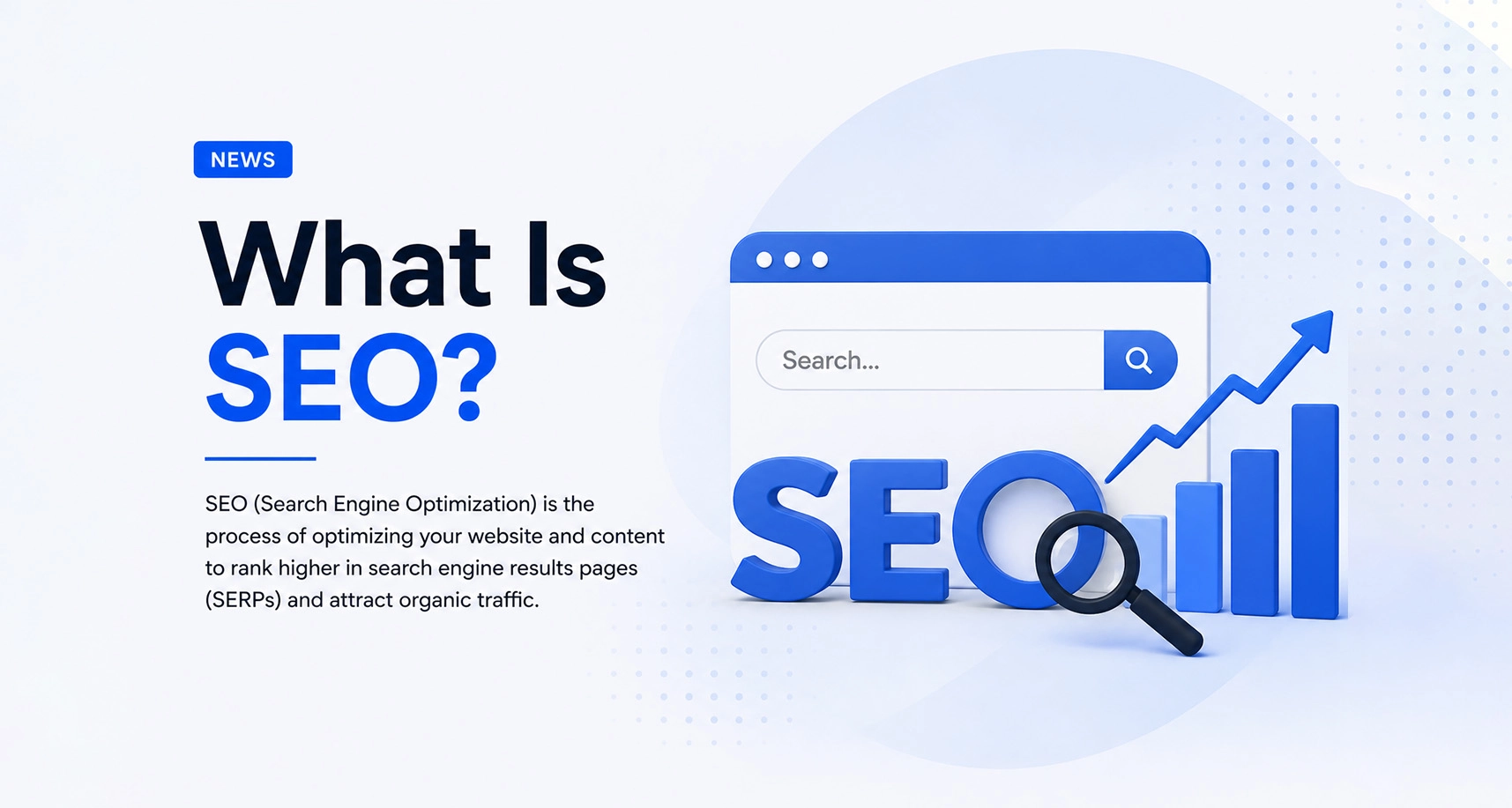
Search Engine Optimization is the process of improving a website so search engines can crawl, understand & rank its pages.
SEO involves several areas, including:
- Keyword research
- Technical SEO
- On-page optimization
- Internal linking
- Website structure
- Page experience
- Mobile usability
- Content optimization
- Link building
The purpose is not simply to rank for as many keywords as possible. SEO should help the right k pages appear when people search for relevant information, products, or services.
A technically strong website can improve crawling & indexing. However, technical optimization alone cannot answer every question users have. That is where useful content becomes important.
What Is Content Marketing?

Content marketing involves creating & distributing information that is useful to a specific audience. It can include blog posts, guides, case studies, videos, reports, social media posts, newsletters & other formats.
The focus is on answering real customer needs instead of simply promoting a product or service.
For example, a furniture company could publish a guide explaining how to choose the right dining table size. The content helps potential buyers understand their options before making a purchase.
A strong content marketing approach also considers where a customer is in the buying journey. Someone researching a problem needs different information from someone comparing products or preparing to buy.
Content Marketing vs SEO: What Is the Difference?
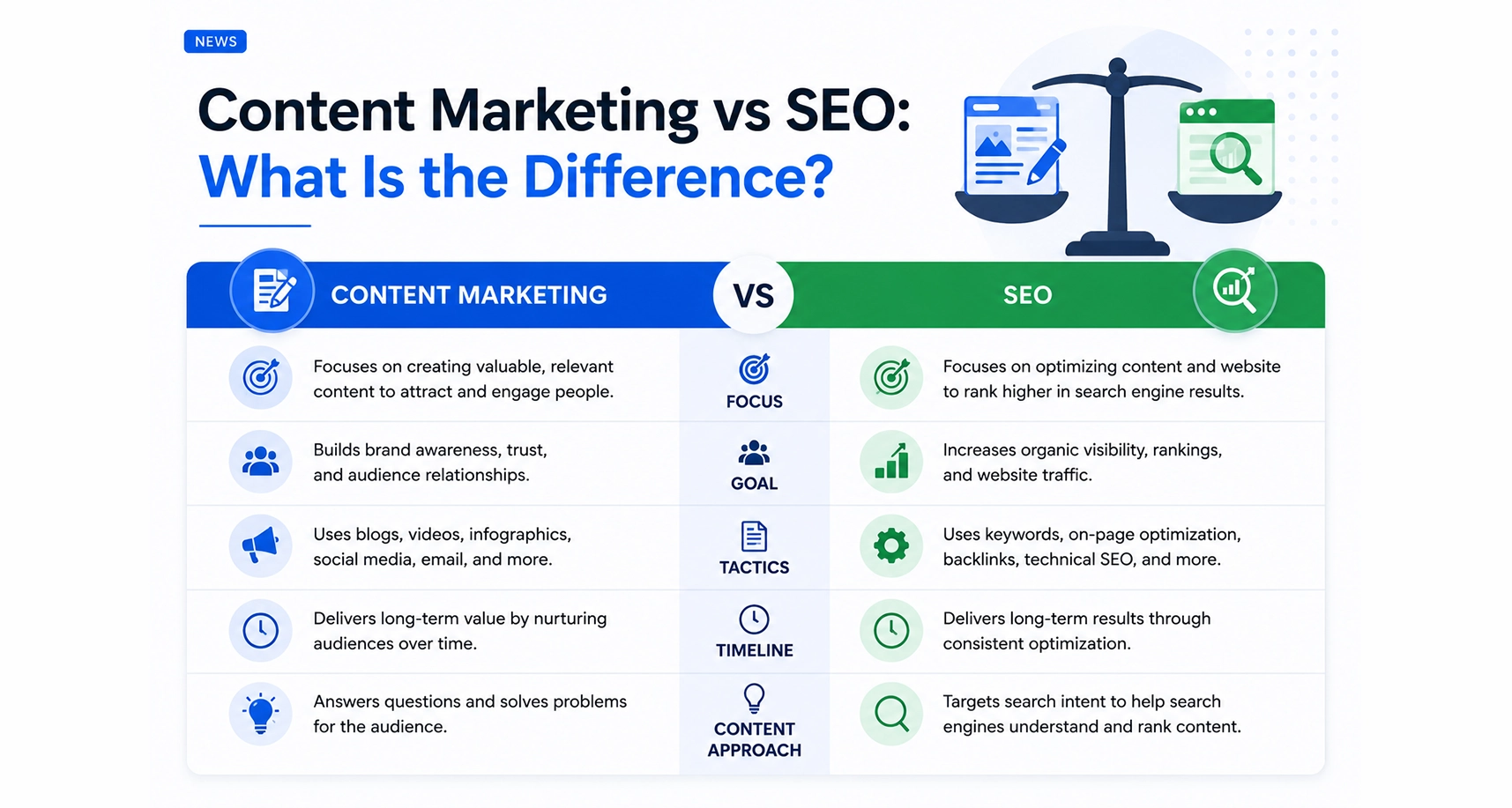
The simplest way to understand content marketing vs SEO is to look at their primary purpose.
SEO helps people discover your website through search engines.
Content marketing helps inform, engage & build trust with those people.
For example, an accounting firm may optimize its website for searches related to business accounting services. That is an SEO activity.
The same firm may publish an article explaining how small businesses can manage cash flow. That is content marketing.
However, the article can also support SEO if it matches what people are searching for & provides a useful answer.
This shows why SEO & content should not operate separately. Search visibility brings people to the page, while useful information gives them a reason to engage with it.
Why SEO Needs Good Content
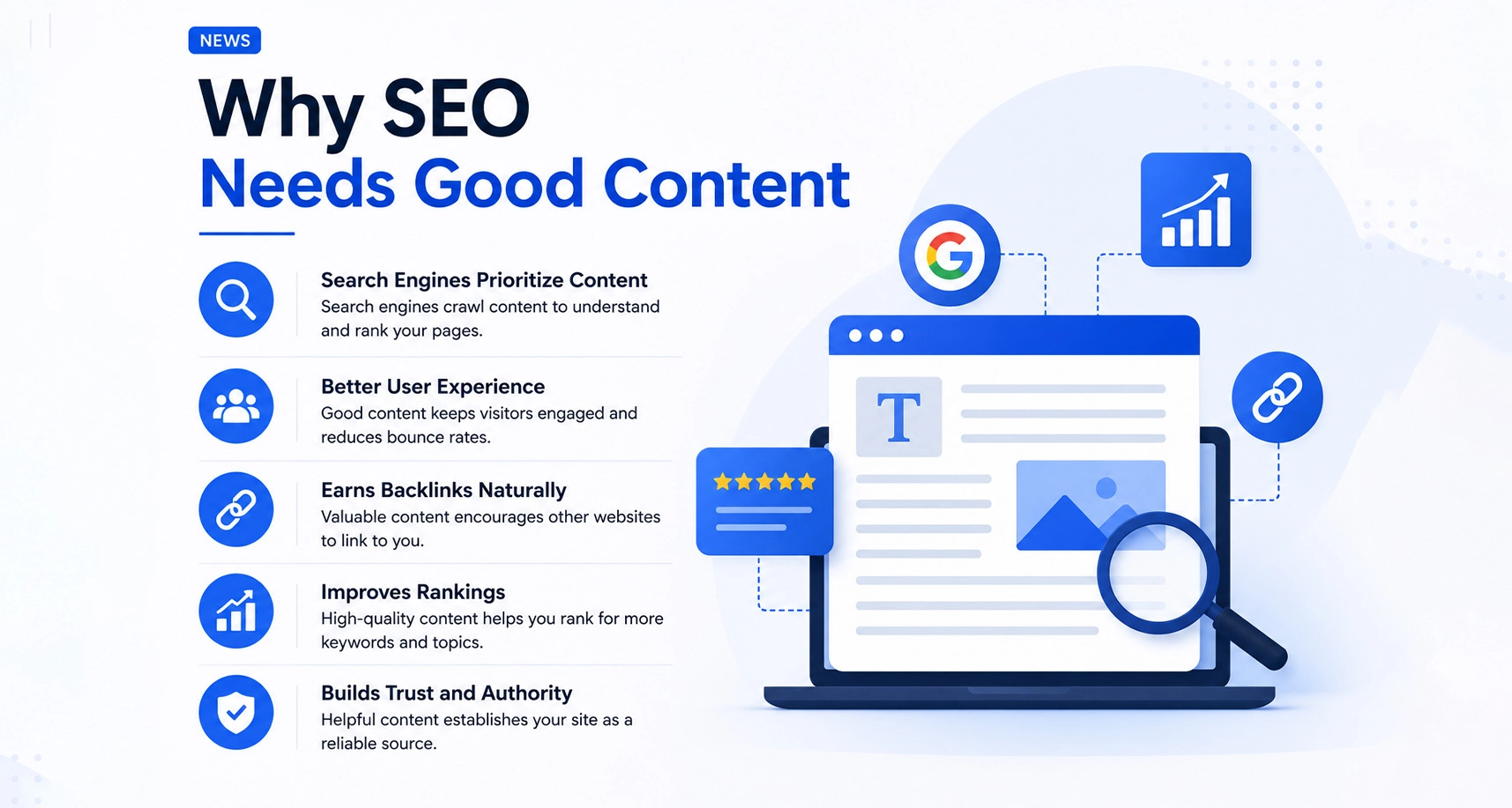
Search engines require information to figure out what a web page talks about and if it can respond to a particular query.
A website might have great technical SEO, but pages that contain only minimal or unhelpful content will not be very valuable for users. An article that contains very helpful information will likely not get very much organic traffic if search engines do not do a good job in indexing or understanding it.
This is why companies must develop a SEO content strategy as merely using keywords will not be enough.
A great plan also takes into consideration search intent, customer wants, relevance of topics, internal linking, quality of content, and business objectives. Keyword analysis is useful in identifying demand, but the keyword should not solely dominate the content.
How Content Marketing Supports SEO
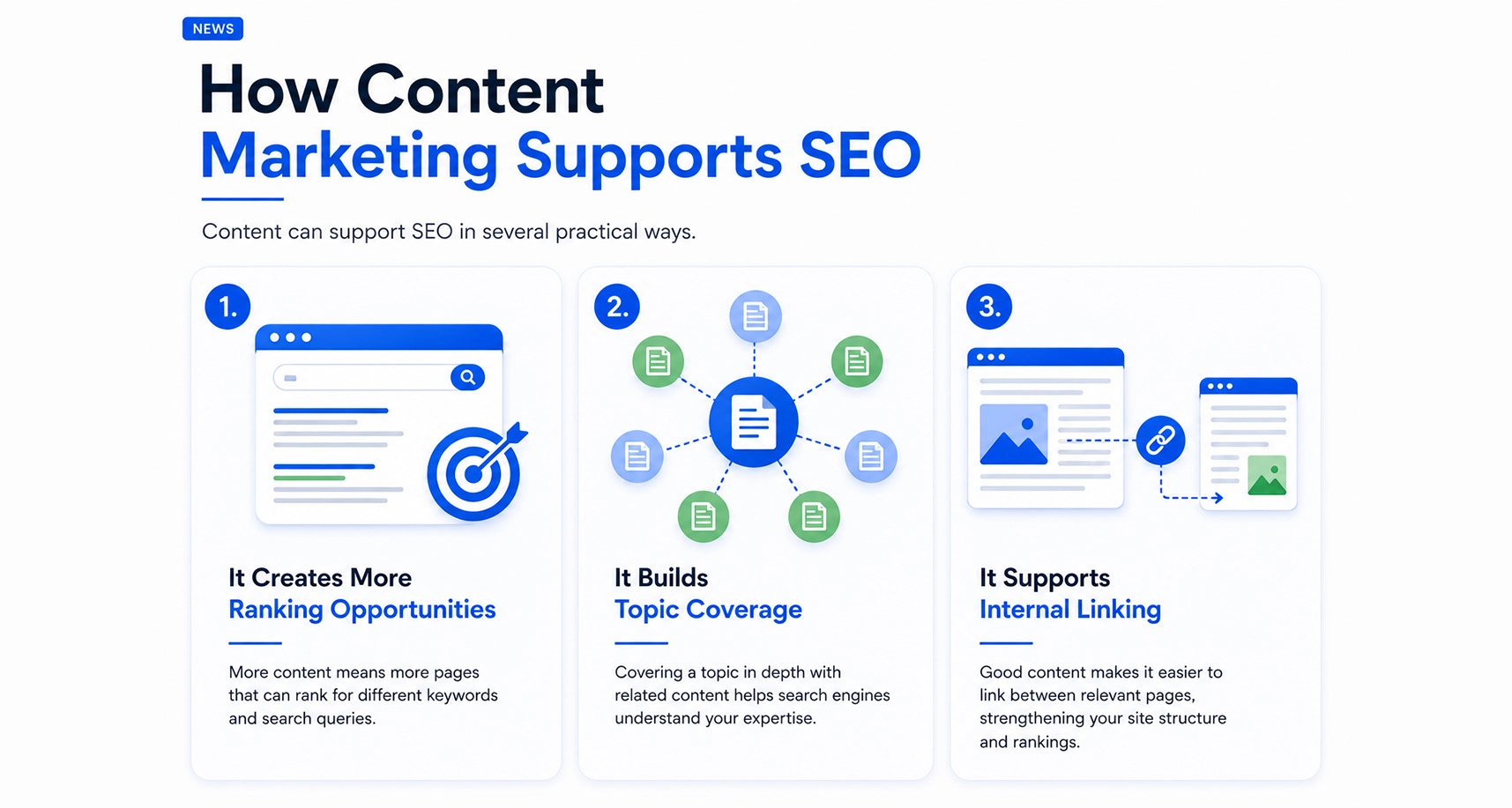
Content can support SEO in several practical ways.
1. It Creates More Ranking Opportunities
A website may have a limited number of product or service pages. Supporting articles allow it to target related informational searches.
For example, a skincare brand may have a product page for sunscreen. It can also publish articles about sunscreen ingredients, SPF levels, sunscreen application & common sunscreen mistakes.
These pages create additional opportunities to appear for relevant searches.
2. It Builds Topic Coverage
Publishing useful content around related subjects can help a website develop stronger coverage of a topic.
A travel website, for example, could cover visa requirements, travel insurance, airport transfers, packing guides, destination information & local experiences.
This broader content marketing approach can help the website address different questions across the customer journey.
3. It Supports Internal Linking
Blog content also creates opportunities to connect related pages.
An article about choosing office furniture could naturally link to office furniture categories, product pages, or another guide about office space planning.
These links help users move between relevant pages while helping search engines understand the relationship between different sections of a website.
How SEO Improves Content Marketing
The relationship works both ways. SEO provides data that can help marketers decide what content deserves attention.
Search research can show:
- What people are searching for
- Which questions they ask
- Related search terms
- Search intent
- Existing ranking pages
- Content gaps
- High-performing topics
This makes content marketing vs SEO less about choosing one approach & more about combining their strengths.
For instance, if users repeatedly search for the cost of a particular service, a business could create a detailed pricing guide. If people compare two products, a comparison article may be more useful.
SEO research therefore helps content teams understand what information people actually need.
What Is an SEO Content Strategy?
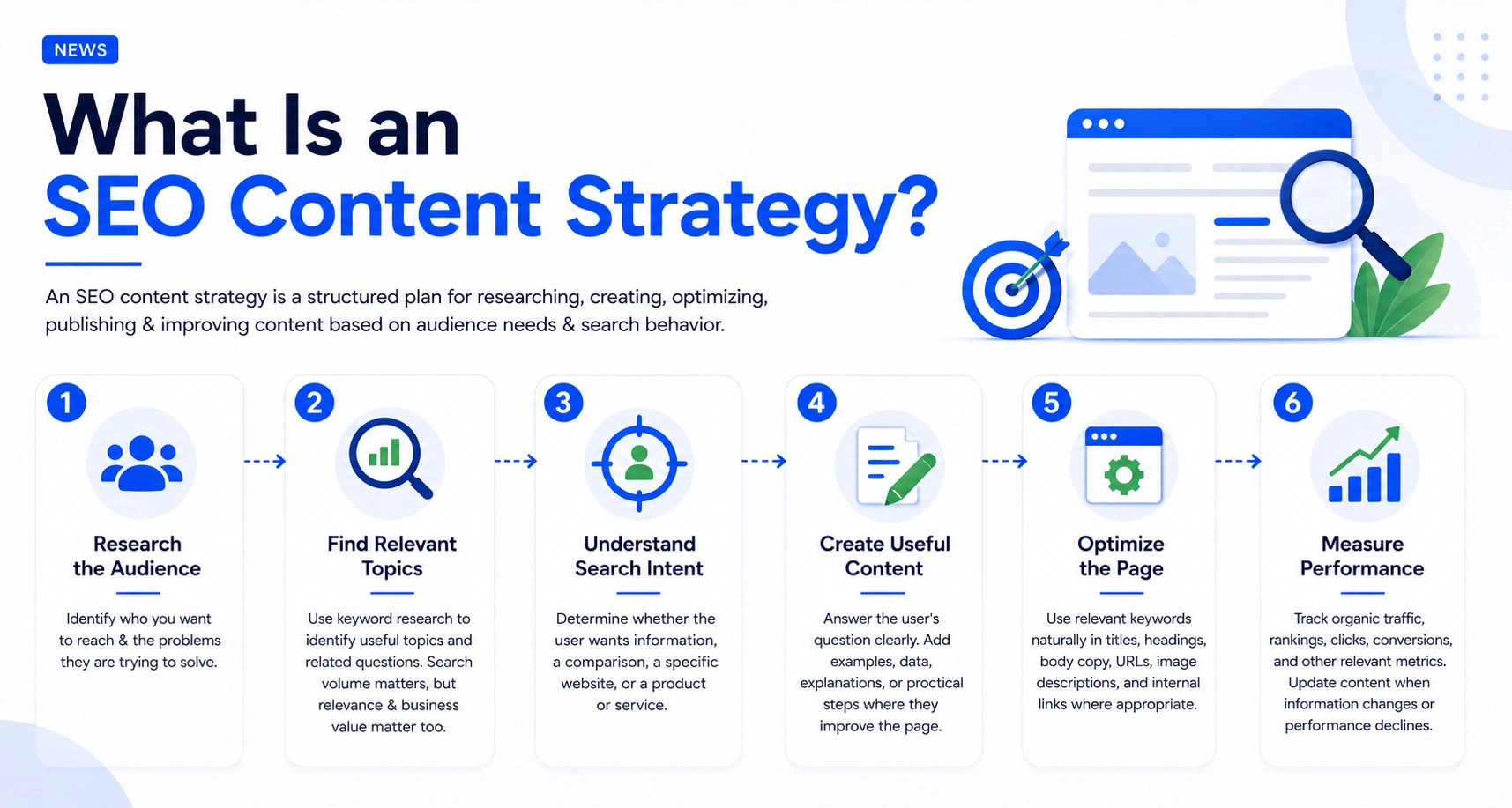
An SEO content strategy is a structured plan for researching, creating, optimizing, publishing & improving content based on audience needs & search behavior.
A practical strategy can follow these steps:
Research the Audience
Identify who you want to reach & the problems they are trying to solve.
Find Relevant Topics
Use keyword research to identify useful topics and related questions. Search volume matters, but relevance & business value matter too.
Understand Search Intent
Determine whether the user wants information, a comparison, a specific website, or a product or service.
Create Useful Content
Answer the user's question clearly. Add examples, data, explanations, or practical steps where they improve the page.
Optimize the Page
Use relevant keywords naturally in titles, headings, body copy, URLs, image descriptions, and internal links where appropriate.
Measure Performance
Track organic traffic, rankings, clicks, conversions, and other relevant metrics. Update content when information changes or performance declines.
Common Mistakes to Avoid
One big mistake made by content marketing vs SEO is focusing the whole strategy around keywords only. A list of keywords will not reveal what the user really wants to know.
Another mistake is publishing large amounts of similar content without a clear purpose. This can create unnecessary pages and make it harder to maintain quality.
Businesses should also avoid writing solely for search engines. Content should be easy to understand and useful to the person reading it.
Finally, informational content should have a logical next step. Where relevant, link readers to a service, product, related guide, consultation, or contact page.
How SEO and Content Marketing Work Together
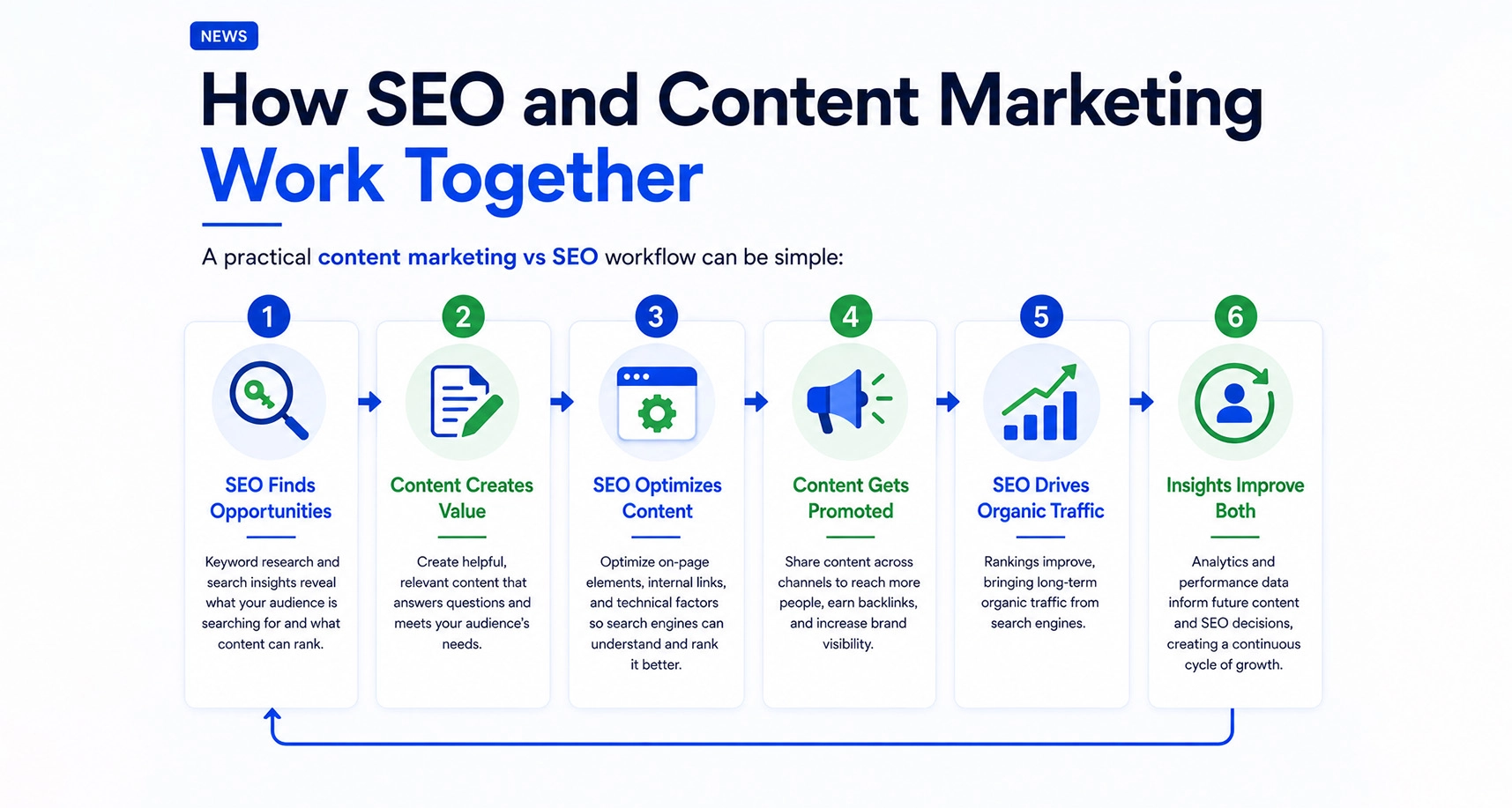
A practical content marketing vs SEO workflow can be simple:
Research → Understand intent → Choose topics → Create content → Optimize → Publish → Link → Measure → Improve
SEO research helps determine what people are searching for. Content turns those needs into useful resources. SEO optimization helps those resources become easier to discover.
The process then continues through measurement and updates. Content that performs well can be expanded, while outdated or weak pages can be improved.
Final Thoughts
The debate around content marketing vs SEO misses the bigger picture. SEO and content marketing perform different jobs, but their results become stronger when they work together.
SEO is basically an activity to increase your visibility in search results while content is giving value to users after they reach the site. When used together, this combination can cause improved rankings, enhanced website interactivity, building of trust, and generating higher quality organic traffic.
The goal is not to publish content simply because a keyword has search volume. The goal is to understand what people need, create the right information, optimize it properly, and keep improving it based on real performance.