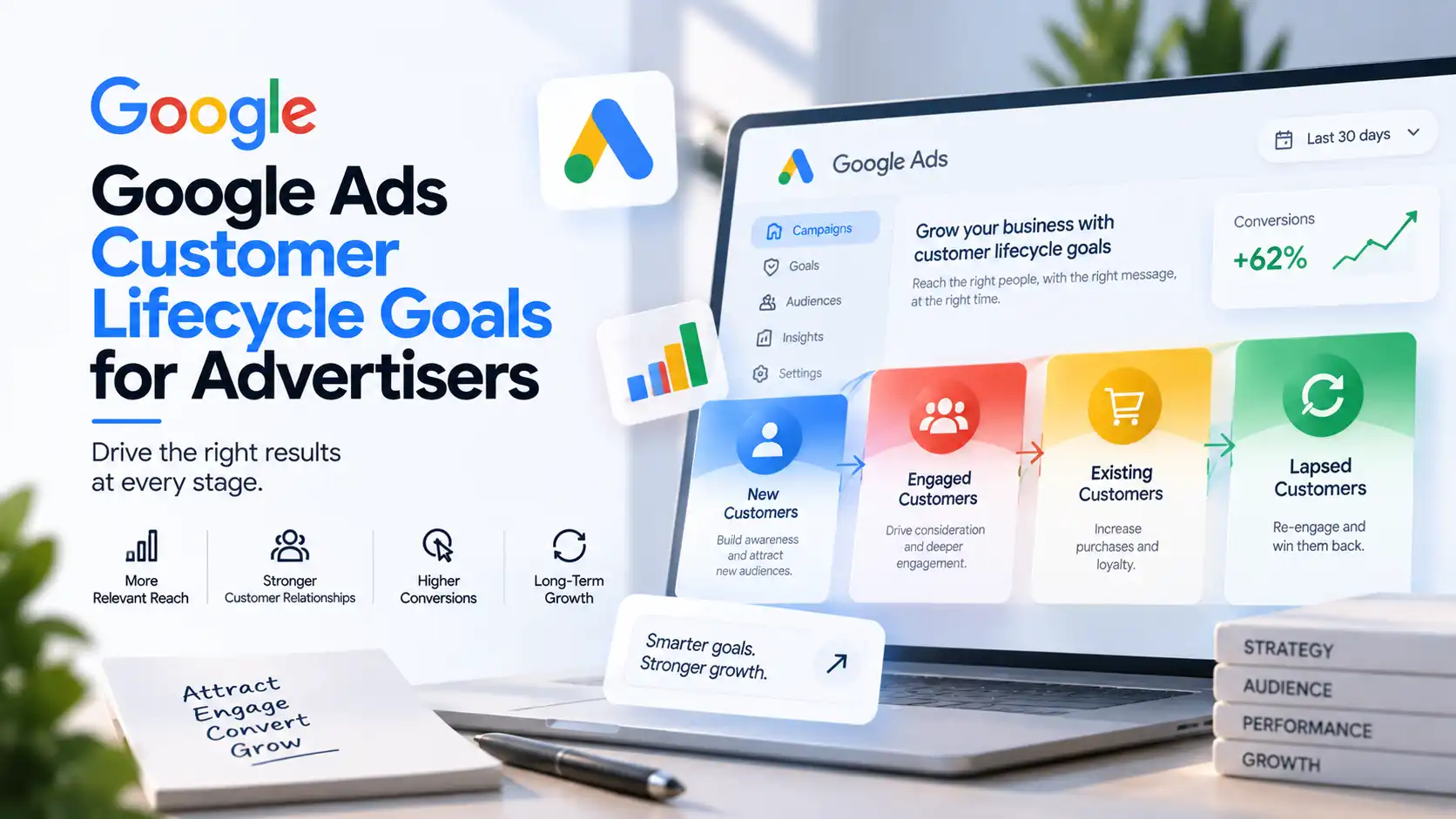
Google Ads’ Customer Lifecycle Goals can help advertisers adjust campaigns based on whether users are new or existing customers. However, incorrect settings can lead to poor targeting and wasted ad spend.
The feature combines audience data with bidding adjustments to help advertisers focus on customer acquisition or retention. Google Ads offers several modes, including options to target new customers, prioritize high-value prospects, re-engage existing customers, or focus on loyalty program members.
Customer Acquisition and Retention Work Differently
Customer acquisition goals are designed to help campaigns find new customers. Depending on the selected mode, advertisers can either bid more for new customers or exclude existing customers from targeting.
The available options include:
- New Customer Value: Targets both new and existing users but bids higher for new customers.
- High Value New Customer: Gives higher bids to new customers who are expected to generate greater value.
- New Customer Only: Targets new customers while excluding users from the existing customer list.
- New Prospect: Goes further by excluding existing customers and people who have already interacted with the business, such as website visitors or users who searched for the brand.
Advertisers can also exclude their customer list without changing bidding behavior. For some campaigns, this can provide the same outcome as using the New Customer Only setting.
Customer Retention Focuses on Existing Customers
Customer retention goals work differently from standard retargeting campaigns. They target people on an advertiser’s customer list while also applying bidding adjustments.
The available retention options include:
- Re-engagement: Targets existing customers and bids more for customers who have not purchased recently.
- High Value Re-engagement: Gives higher bids to lapsed customers who are expected to have higher value.
- Loyalty Program Members: Targets users included in a separate loyalty program customer list.
For Search, Shopping, and Demand Gen campaigns, advertisers can simply use audience targeting if they want to reach their customer list without changing bids.
Performance Max Has Different Rules
Performance Max supports all Customer Lifecycle Goals. Unlike Search, Shopping, and Demand Gen, PMax does not offer traditional audience targeting. It uses audience signals instead.
Because of this, advertisers who want a Performance Max campaign to serve only to existing customers need to use a customer retention goal.
Customer acquisition settings can also be used with Performance Max to change how the campaign handles new and existing customers.
Customer Lists Are the Starting Point
To use Customer Lifecycle Goals, advertisers first need to provide a customer list through Google Ads’ Audience Manager. The account-level lifecycle settings are available alongside the conversions setup.
Campaign compatibility depends on the campaign type and bidding strategy. Most Customer Lifecycle Goals work with value-based Smart Bidding, such as Target ROAS or Maximize Conversion Value, although some exceptions exist.
Google Ads also continues to update which campaign types and bidding strategies support these features.
Why Correct Setup Matters
Customer Lifecycle Goals are not simply labels for acquisition or retargeting campaigns. The selected setting can change who a campaign targets and how Google adjusts bids.
For example, incorrectly configuring a New Customer Acquisition campaign could exclude more users than intended. This can reduce the available audience and make it harder for the campaign to reach its performance targets.
Advertisers should therefore check their customer lists, campaign settings, targeting behavior, and bidding strategy before using Customer Lifecycle Goals.
Understanding the difference between new customer acquisition, new prospecting, and customer retention can help advertisers avoid overlapping campaigns and unintended exclusions.
Get in touch with Vybepop for all your performance marketing requirements.