
Google Removes Campaign Language Controls From Search Campaigns
Add as a Preferred source on Google
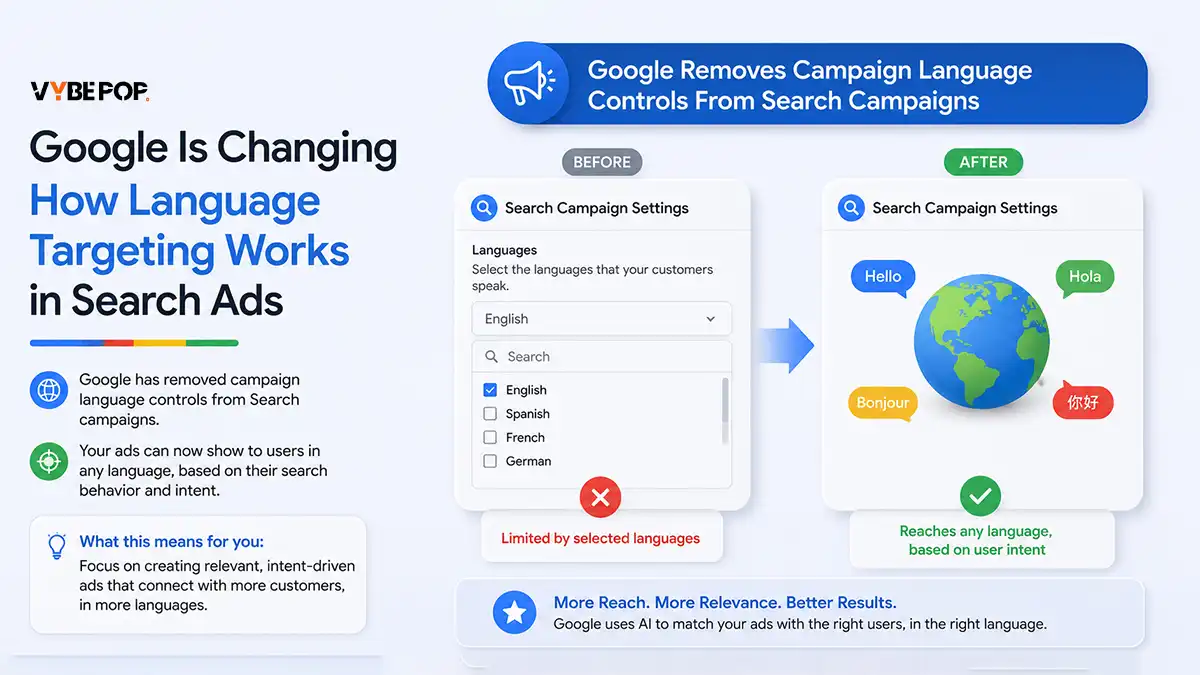
Google Ads is removing campaign-level language targeting from Search campaigns and the Search portion of Performance Max campaigns.
The change is expected to roll out in late September. Google will instead use the language of ads and landing pages, along with its existing signals about which languages a user understands.
For advertisers, this means Google will have more control over deciding which language version of an ad can serve.
What Is Changing?
Today, advertisers can select languages at the campaign level. Google then combines that setting with signals such as the user’s search language, settings and other information.
After the update, this campaign-level language setting will no longer control Search campaigns or AI Max for Search campaigns.
Google will instead consider:
- The language used in the ad
- The language of the landing page
- The languages Google believes the user understands
- The language of the search query
- Other Google signals
For Performance Max, the change will apply only to Google Search. Language targeting will continue to be used across other Performance Max channels.
How Google Will Choose Between Languages
Google says multiple language versions can remain eligible when a user understands more than one language.
For example, if Google determines that a user understands English and Spanish, ads in either language may be eligible.
Its systems will then decide which ad is the better match.
When a search clearly indicates a language, Google says it will generally prioritize an ad and landing page in that language when available.
Brand searches could be less straightforward. Brand names often look the same across languages, giving Google fewer clues from the search itself.
In those cases, Google may use other language signals, including the user’s preferred language.
Existing Campaigns Do Not Need To Be Restructured
Google says advertisers do not need to combine or rebuild campaigns because of this change.
For example, advertisers that currently maintain separate English and Spanish campaigns can continue doing so.
The difference is that the language setting itself will no longer determine eligibility on Search.
Google will instead use the ads and landing pages in those campaigns as language signals.
Advertisers using the Google Ads API should also stop sending language criteria when creating or updating Search campaigns. Existing criteria can remain, but they will no longer affect Search targeting.
Some Advertisers Have Bigger Concerns
The change may be more important for advertisers that use language targeting for specific business or compliance reasons.
During a Google advertiser roundtable, regulated businesses raised questions about proving which language audiences received their ads.
For example, an insurance company may need to show that its advertising reaches both English- and Spanish-speaking audiences fairly.
Google said having ads in both languages signals that the advertiser intends to reach both audiences.
However, it did not provide a new reporting feature showing exactly which language was used to serve each ad.
That could create challenges for businesses that need detailed delivery records for compliance.
AI Max Adds Another Layer
Advertisers also asked how the change could affect AI Max campaigns and automatically generated ads.
Google confirmed that an ad does not always need to match the language of the search query.
For example, a user could search in English and still see a French ad if Google believes the user understands French and its systems select that ad.
This means query language alone will no longer determine which language an advertiser’s ad can use.
What Advertisers Should Do
Most advertisers do not need to make major changes before the rollout.
Google recommends keeping existing campaign structures and ensuring that ads and landing pages use the intended languages.
Multilingual advertisers should pay closer attention to performance after the change.
Monitor:
- Search terms
- Geographic traffic
- Audience changes
- Ad language performance
- Landing page language
- Unexpected traffic from different language groups
The main concern is not campaign restructuring. It is understanding how Google’s automated language matching affects traffic once the campaign-level control disappears.
What To Watch After September
Google says the update should not fundamentally change how language matching works today.
However, advertisers will have less direct control over language eligibility in Search.
The impact will become clearer after the rollout, especially for multilingual, international and regulated advertisers.
If traffic and performance remain stable, it would support Google’s view that campaign-level language targeting was largely redundant.
For advertisers that used the setting as an additional control, the bigger question will be whether Google’s automated system provides enough visibility and control for their specific needs. To stay updated, get in touch with Vybepop Media.
Recent blog