

Hreflang URLs May Not Be Indexed Separately, Google Says
Add as a Preferred source on Google
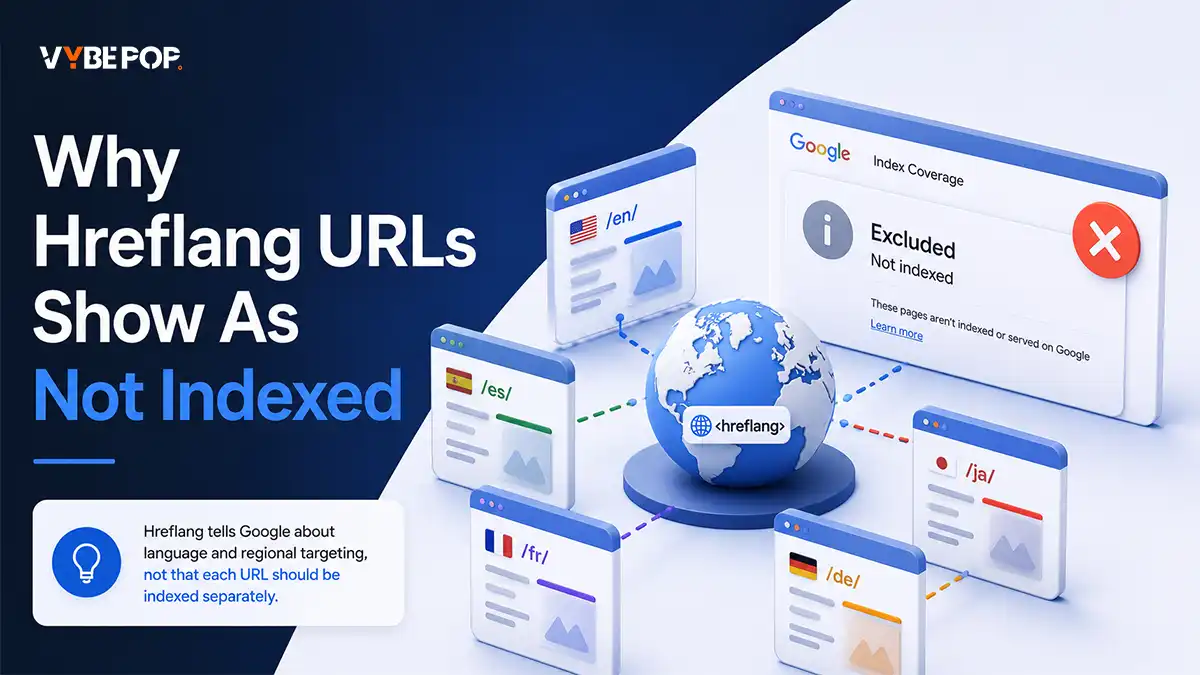
Google has clarified that hreflang URLs do not need to be indexed separately for Google to use them in Search.
Google Search’s Gary Illyes explained that hreflang alternate URLs are treated as alternate URLs linked to a canonical page. This means a specific language version may appear as “not indexed” in Google Search Console, while still being mapped to the indexed canonical URL.
The clarification came after Faiez Javaid asked how Google can show different language versions in Search when it selects one language URL as canonical and reports the others as not indexed in Search Console.
Illyes explained that Google uses alternate URLs in two ways.
First, when Google selects a canonical URL, other URLs within the same duplicate cluster can become “alternate names.” Google may still use these URLs in Search results when they match a user’s query. Illyes said one prominent example is site: searches, where Google may show URLs that redirect even though those URLs are not indexed separately.
Second, hreflang alternate URLs can also be treated as alternate URLs rather than independently indexed pages. Google can map these URLs to the canonical page that is actually indexed.
This means a hreflang URL being marked as “not indexed” does not necessarily prevent Google from using that language version in Search. The URL can remain connected to the indexed canonical page as an alternate. To stay updated, get in touch with Vybepop Media.
Recent blog