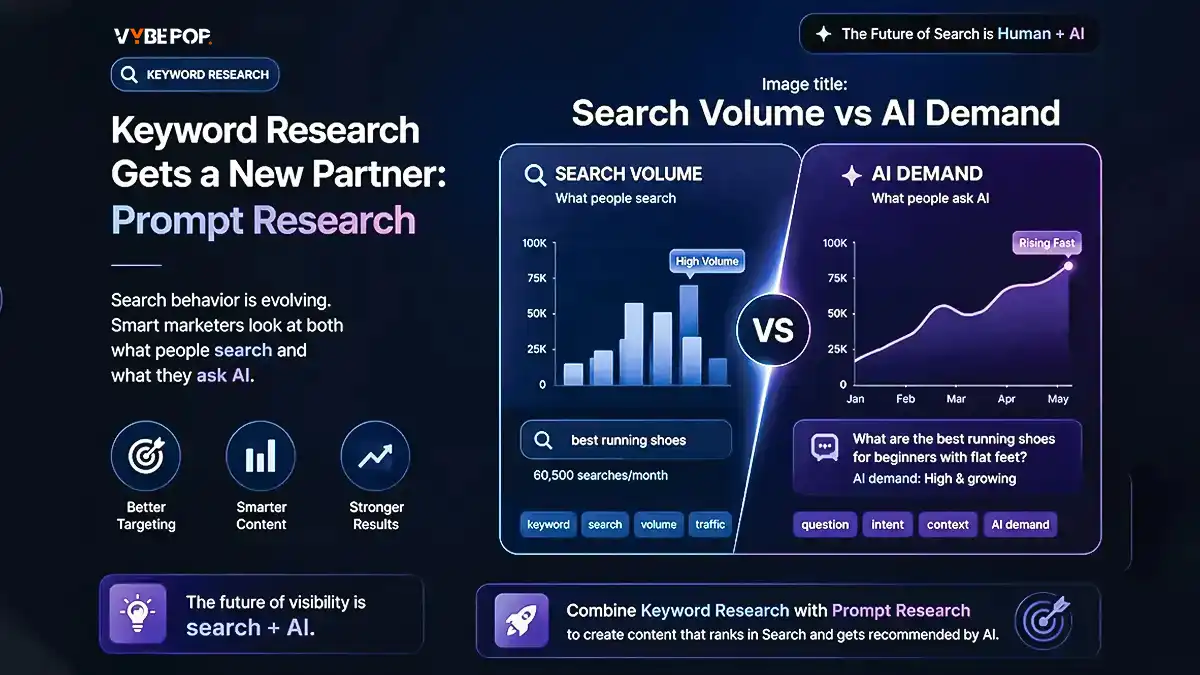
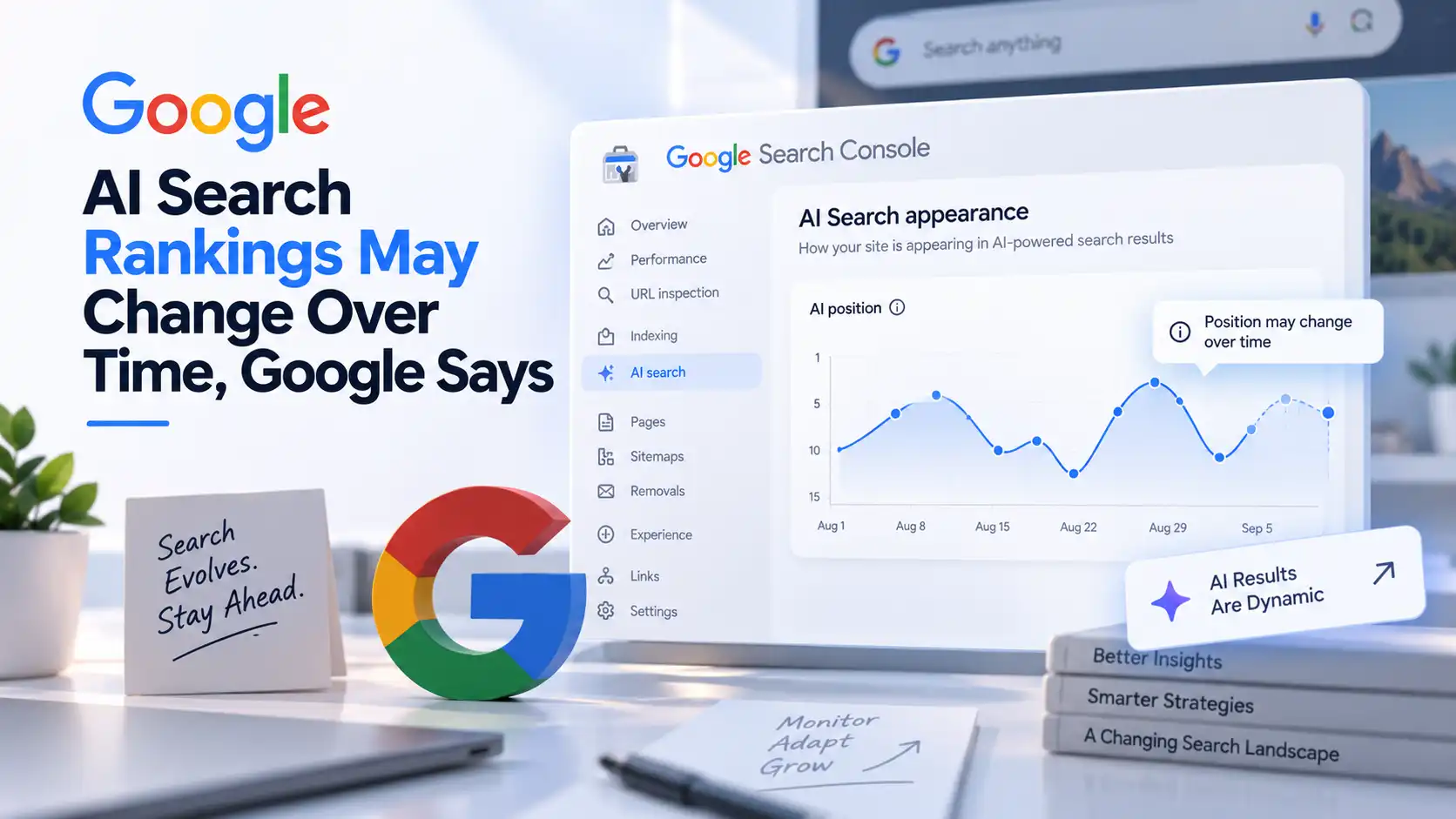
SEO teams may soon need to look beyond traditional keyword research when deciding which topics deserve content. A newer approach combines keyword search demand with AI prompt demand to understand what people are looking for across both search engines & AI assistants.
The idea is simple: keyword tools show what users type into Google, while prompt research shows what they ask tools such as ChatGPT, Gemini, Claude & Perplexity. Comparing both can reveal topics that traditional SEO research may overlook.
Why Prompt Research Matters
Traditional keyword research has long been a starting point for SEO strategies. Tools such as Google Keyword Planner, Semrush & Ahrefs help marketers understand search volume, related keywords & search intent.
But AI assistants have changed how people look for information.
Instead of searching for a short phrase such as “best CRM software,” a user may ask an AI assistant, “Which CRM should a small business use if its sales team has five people?”
That longer question may not appear as a high-volume keyword. However, it still represents real demand.
Prompt research attempts to capture this type of behaviour by analysing the topics and questions people submit to AI platforms.
Put Search Demand and Prompt Demand Together
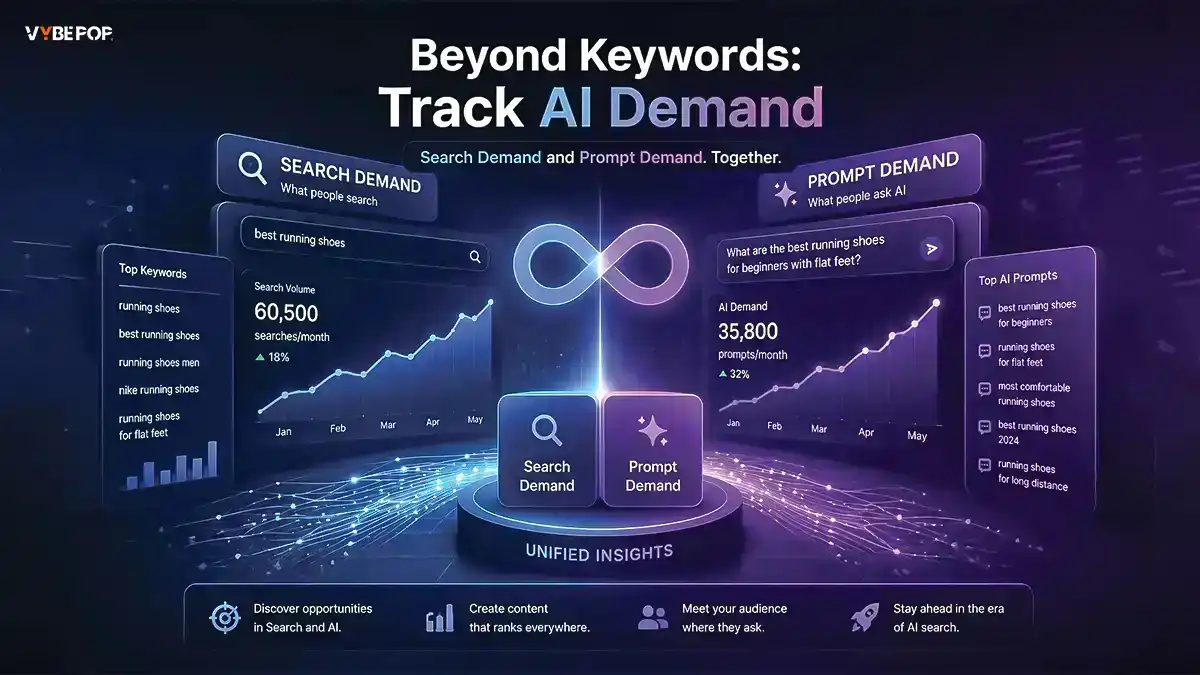
A practical way to use both signals is to create a simple research table.
One column contains keyword volume, showing traditional search demand. Another contains prompt volume, showing how frequently related topics appear in AI conversations.
Keyword data can come from tools such as Google Keyword Planner, Semrush or Ahrefs. Prompt data can be sourced from platforms that track AI search behaviour & estimate how often topics appear in conversations.
The numbers should not be treated as perfectly precise. Keyword tools can combine similar searches, while prompt-volume estimates are better used for comparing broad levels of demand.
The real value comes from the relationship between the two numbers.
Four Ways to Prioritize Topics
Once both data points are available, topics can generally be placed into different content groups.
1. High Keyword Demand, Low Prompt Demand
These are traditional SEO opportunities.
A topic may receive thousands of monthly searches but show little AI prompt activity. In this case, the focus should remain on winning the search results.
Content teams can study the current SERP, identify gaps in competing pages & create a more complete answer.
The page should still be clearly structured, with useful headings, direct answers & supporting information. However, there is no need to completely change the content strategy just to target AI assistants.
2. Low Keyword Demand, High Prompt Demand
This is where prompt research can uncover opportunities that keyword research may miss.
A topic could have relatively low Google search volume but appear frequently in AI conversations. That suggests people are interested in the problem, even if they are not using a traditional search query to find information about it.
For these topics, content should focus heavily on answering questions clearly.
Definitions, direct answers, examples & practical explanations become particularly important. The goal is to create content that can provide useful information when AI systems generate answers.
3. Strong Demand Across Both
When a topic has significant keyword & prompt demand, it becomes a stronger content investment.
These topics can support flagship or pillar content aimed at both traditional search results and AI-generated answers.
Keyword research can help determine the page's primary topic, title and search intent. Prompt research can add the questions, problems & conversational language that users bring to AI assistants.
Together, the two datasets can create a more complete content brief.
4. No Prompt Volume Doesn't Always Mean No Demand
An empty prompt-volume result should not automatically be treated as zero interest.
AI tools may group specific questions under broader topics. A narrow question might therefore show little or no individual prompt demand while still being part of a much larger conversation.
This makes prompt research a directional signal rather than an exact measurement of demand.
What This Means for SEO Teams
The biggest change is not that keyword research is becoming irrelevant. It is that keyword research may no longer show the complete picture of online demand.
People now search in two different ways. They use traditional search engines for short queries & increasingly use AI assistants for detailed questions & problems.
Looking at both behaviours can help SEO teams identify content opportunities earlier, prioritize topics more effectively & create pages that work across traditional search and AI-driven discovery.
The future of topic research may therefore be less about choosing between keywords and prompts & more about understanding what each tells us about the same audience. To stay updated, get in touch with Vybepop Media.