Understanding on-page vs off-page SEO is essential for improving search rankings. While on-page SEO focuses on optimizing your website, off-page SEO builds credibility and authority, making both vital for a successful long-term SEO strategy.

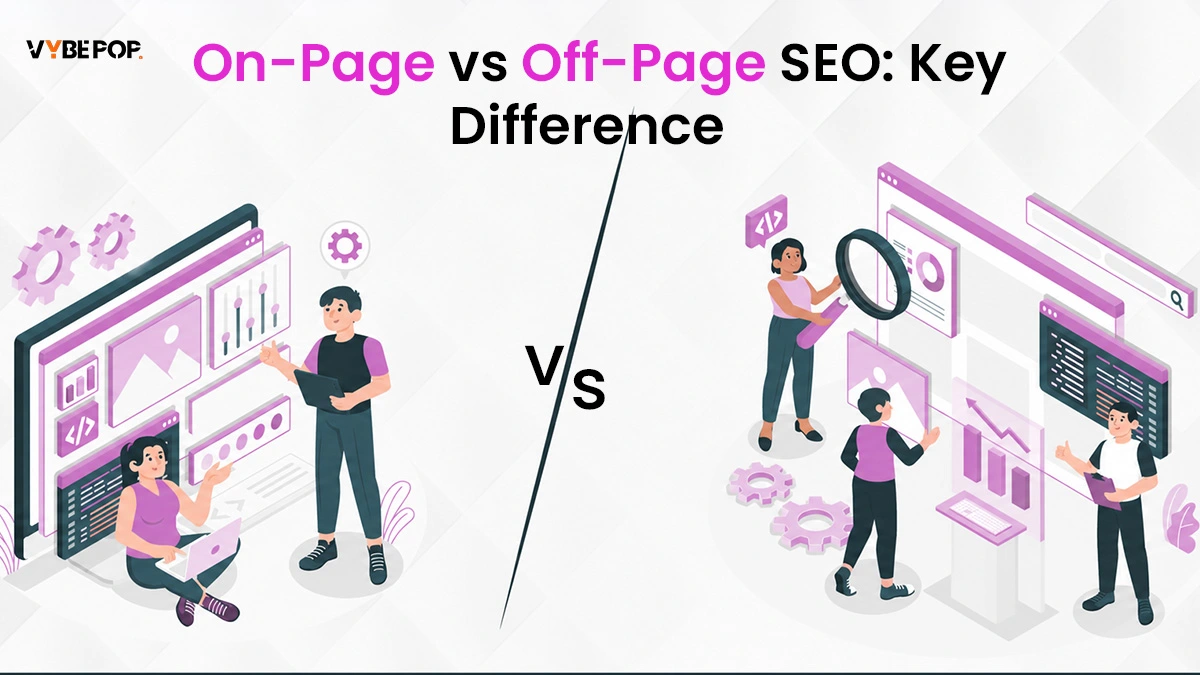
Understanding on-page vs off-page SEO is essential for improving search rankings. While on-page SEO focuses on optimizing your website, off-page SEO builds credibility and authority, making both vital for a successful long-term SEO strategy.
Understanding on-page vs off-page SEO is essential if you want better search rankings. While both improve your website's visibility, they serve different purposes. One optimises your website, and the other builds its authority online. Knowing how they work together helps you create a stronger and more effective SEO strategy.
Now, in this blog, we are going to explain both the SEO strategies so that you can decide which one should you choose for your website.
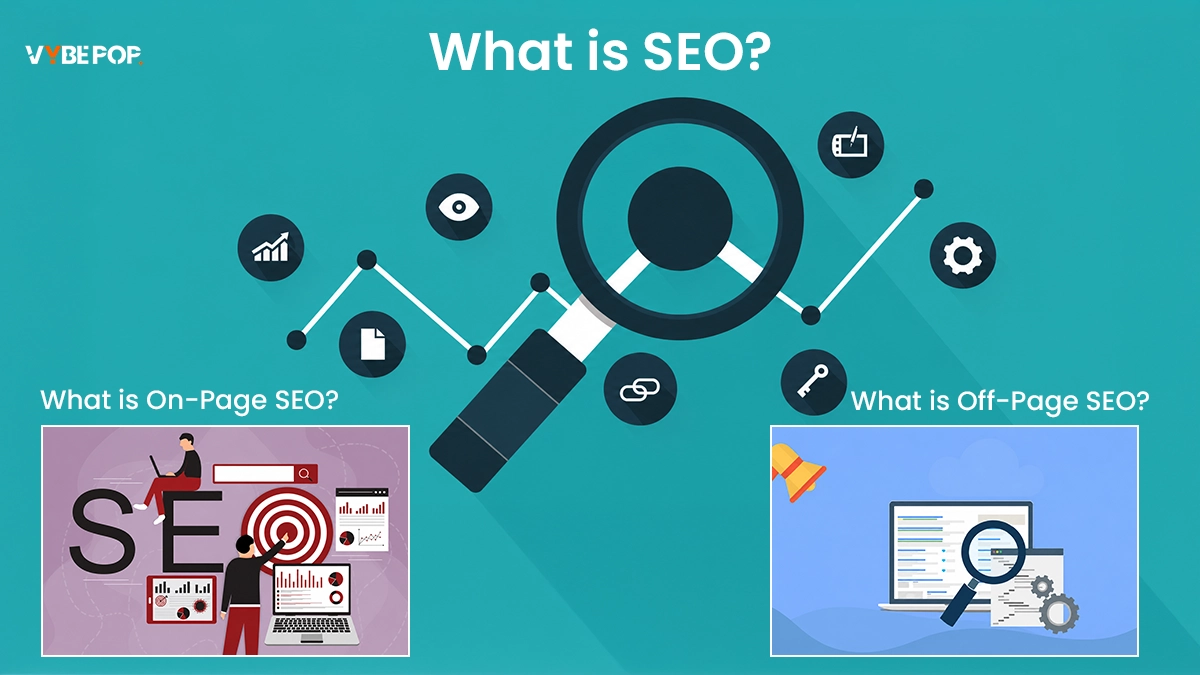
Search Engine Optimization is simply the act of optimising a website for ranking on the search engines. It involves activities that let you tell a search engine what your page is about, get it indexed and find it for people. It helps to increase the amount of traffic to websites by making online content highly pertinent and helpful to the users.
When comparing on-page vs off-page SEO, it is wise to start with the definition of on-page SEO. On-page SEO is the term used for all the optimizations done directly on your website page. These website optimization techniques do two things: 1) they make search engines comprehend your content, and 2) they make your site easier to navigate for your visitors.
Some important techniques include:
Since these elements are completely under your control, they form the foundation of every successful SEO strategy.
The off-page SEO part in the on-page vs off-page SEO comparison relates to off-page SEO activities done by the website owner outside their own site. Off-page SEO is about boosting your website authority and getting referrals from others. It is these factors (among others) that search engines take into account before they decide that your website is worthy of a good placement on the SERP.
Some of its common SEO activities include:
The stronger your online reputation, the better your chances of improving search rankings.
Understanding on-page vs off-page SEO becomes easier when you compare both strategies side by side.
|
On-Page SEO |
Off-Page SEO |
|
Done within your website |
Done outside your website |
|
Improves website content and structure |
Improves website authority |
|
Controlled by website owners |
Depends on external websites |
|
Focuses on user experience |
Focuses on trust and credibility |
|
Includes technical optimization |
Includes backlinks and mentions |
Although they have different goals, both are equally important for improving search visibility.

Many website owners think they should focus on only one strategy. However,on-page vs off-page SEO works best when both are combined.
The most attractive content may still be difficult to rank without referring sites as well as site authority. Then again, a site with countless backlinks might not get the desired result if its content is poor. The search engine decides the ranking not only on the quality of contents but also the reliability of the site.
An integrated utilization of both approaches will result in a significant increase in organic traffic, user experience, and long-term search results.

When launching a new site, it's best to first start your on-page vs off-page SEO journey by focusing on on-page improvements. It is because that your site should be thoroughly optimized so that it's already well-indexed and ranking before you waste efforts on building external links.
Start by:
Once these basics are complete, begin building quality backlinks through guest posts, partnerships and content promotion.
One should avoid these common mistakes While working on on-page vs off-page SEO as these can affect your rankings.
Focusing on quality instead of shortcuts delivers better SEO results over time.
Choosing between on-page vs off-page SEO is not the right approach because both are equally important. If you enhance your website through on-page SEO, then off-page SEO is the way to go for increasing the credibility of your website. A well-rounded SEO strategy that includes both will lead the search engines to view you as trustworthy thereby improving your ranks and bringing you long-term traffic organically.
A1. On-page SEO focuses on optimising your website, while off-page SEO improves your website's authority through backlinks and other external signals.
A2. Both are important. On-page SEO creates a strong foundation, while off-page SEO helps improve trust and rankings.
A3. Yes, but mainly for low-competition keywords. For competitive searches, off-page SEO is also necessary.
A4. Most websites start seeing SEO improvements within three to six months, depending on competition, content quality and consistency.